

Bridge the gap between flavour chemistry and real-world experience.
Designing Product Experience
“Kami had an infectious enthusiasm for the topic and made quite complex concepts easier to understand and it was presented in a super engaging way. My brain was working overtime to try to take all the information in but in the best way. It was fascinating, fun and insightful. Kami gave me so much inspiration to change the way I talk about flavour in my own whisky tastings in future. I cannot wait to take a deeper dive into his book – which was a lovely addition to the day too.”
Better products begin with understanding the experience.
An evidence-led course for food and beverage teams who want to understand how people experience, evaluate and remember products, and use that understanding to make better product decisions.
A product can perform well in sensory testing and still fail to connect with consumers. It can attract attention without communicating its value, deliver an enjoyable experience without earning repeat purchase, or make a strong first impression that is quickly forgotten.
The problem isn't always the product itself. It may be how the experience unfolds.
Designing Product Experience gives you a practical framework for understanding the full journey: from the expectations people bring to a product, through the sensory experience of consumption, and to the memories that shape future decisions.
Drawing on psychology, neuroscience, sensory science and behavioural research, you'll learn to diagnose where product experience breaks down, identify opportunities for improvement and translate scientific insight into commercially meaningful action.
Understand the experience. Diagnose the problem. Design for success.

Experience unfolds over time. Your approach to product development should reflect that.
Designing Product Experience follows the consumer journey from anticipation to future choice.
01. Anticipation
Understand how prior experience, expectations, packaging, price, positioning and context influence what people anticipate and how they approach a product.
02. Encounter
Explore how people interpret product signals, understand its purpose and decide whether it is relevant to their needs or occasion.
03. Sensory experience
Investigate how taste, smell, texture and other sensory inputs combine with attention, context and interpretation to shape the experience.
04. Memory and recall
Discover how experiences are encoded, retained and reconstructed, and why the experience people remember may differ from the one they had.
05. Re-encounter and choice
Understand how recognition, remembered value, learned associations and expectations influence subsequent selection, consumption and recommendation.
The process is cyclical. Previous experiences shape future expectations, which influence how the next experience is perceived.
By examining the complete timeline, you can move beyond isolated product attributes and begin to understand how value is created, lost and carried forward.
Six pillars for diagnosing product success
How do you determine whether a product has an experience problem, and where to look for its cause?
The course introduces six diagnostic pillars that provide a shared framework for investigating product performance.
Clarity
Can people understand the product and what it offers?
Diagnose adoption failure by examining whether consumers quickly understand the product, its purpose and how it fits into their lives.
Positioning Fit
Does the product feel right for the need or occasion?
Diagnose mis-targeting by investigating whether the product is relevant to the consumer's goals, expectations and circumstances.
Coherence
Does the experience hold together as a whole?
Diagnose liking failure by examining how sensory properties, brand signals, context and interpretation combine to create a unified or conflicting experience.
Expectation Fit
Does the experience deliver on its promise?
Diagnose disappointment by investigating the relationship between what people anticipate and what they actually experience.
Flow
Does the experience develop and resolve satisfactorily?
Diagnose breakdown within the experience by examining how it progresses, sustains interest, changes in intensity and reaches its finish.
Distinctiveness
Is the experience recognisable and memorable enough to be retrieved later?
Diagnose re-selection failure by investigating whether the product creates distinctive sensory or associative cues that help it stand apart from alternatives.
Together, the six pillars help teams move from describing a problem to investigating its likely causes.
They are not six isolated scores to optimise. They are complementary diagnostic lenses that can be applied across the entire experience timeline.
From scientific insight to better product decisions
Knowing how perception and memory work is useful. Knowing what to do with that knowledge is where the commercial value lies.
This course connects scientific understanding with a practical method for product development.
Diagnose before you redesign.
Learn to distinguish symptoms from underlying causes, generate testable explanations and identify where additional evidence is needed before committing to a solution.
Design with the consumer's experience in mind.
Use insights into expectation, sensory perception, temporal development and memory to develop more purposeful product and experience interventions.
Research the question that matters.
Understand how to choose appropriate sensory, consumer and behavioural methods, interpret findings and recognise the limits of the evidence.
Translate insight across functions.
Create a shared language for sensory scientists, product developers, brand managers, marketers and commercial teams, enabling them to connect their expertise to a common understanding of the consumer experience.
Evaluate what actually changes.
Move beyond immediate liking as the sole measure of success. Learn to define outcomes that match the problem being investigated, including comprehension, perceived relevance, sensory experience, delayed recall and subsequent choice where appropriate.
The aim is not to replace existing product-development expertise. It is to help teams use that expertise more effectively by understanding the experience it is intended to create.
What you'll learn
By the end of the course, you'll be able to:
Map the product experience from anticipation through consumption, memory and future choice.
Explain how psychological, sensory and contextual factors influence perceived value.
Apply the six pillars to diagnose product-experience problems.
Distinguish observable findings from assumptions and competing explanations.
Develop testable hypotheses about why a product succeeds or underperforms.
Select appropriate research methods to investigate those hypotheses.
Design targeted interventions based on evidence rather than intuition alone.
Translate research findings into clear product-development and commercial recommendations.
You'll leave with a framework you can apply to real products, real consumer challenges and real business decisions.
Built for teams who need to make better decisions together.
Product experience does not belong to a single department. It develops at the intersection of product properties, consumer expectations, sensory perception, brand meaning and behaviour.
The course is designed for cross-functional food and beverage teams, including:
Product development and innovation
Understand how changes to product properties influence the wider experience, and identify opportunities beyond reformulation alone.
Sensory and consumer research
Connect sensory findings to consumer interpretation, memory and behaviour, and improve the questions your research is designed to answer.
Brand and marketing
Understand how product promises, contextual signals and brand associations shape expectations and influence the experience delivered.
Insight and commercial teams
Connect consumer responses to plausible mechanisms, improve the quality of product decisions and identify where further investigation can reduce uncertainty.
Leadership and innovation management
Give teams a common framework for prioritising product opportunities, evaluating evidence and allocating development resources.
The greatest benefit comes when these disciplines work through the framework together.
A practical course, not just a theory of experience.
Designing Product Experience combines evidence-led teaching with workshops and practical applications.
Participants work with real food and beverage products, examine sensory and behavioural evidence, challenge assumptions and develop recommendations grounded in a defined problem.
The programme includes:
Core learning modules
Build a shared understanding of expectation, sensory perception, temporal experience, memory and consumer choice.
Applied workshops
Map product experiences, investigate sensory interactions and practise diagnosing problems through the six pillars.
Research-to-business exercises
Turn scientific concepts into testable hypotheses, research plans and product-development recommendations.
A final product-experience project
Bring the framework together in a complete diagnosis, intervention proposal and validation plan.
The emphasis throughout is on application: understanding the science well enough to use it, without losing sight of the commercial decisions it needs to inform.
Better questions lead to better product decisions.
When a product underperforms, the instinct is often to change something visible: the flavour, the packaging, the positioning or the price.
Sometimes that is the right response. Sometimes it addresses the symptom rather than the cause.
Perhaps consumers do not understand the product. Perhaps it fails to fit a meaningful occasion. Perhaps the promise creates expectations the experience cannot fulfil. Perhaps people enjoy it in the moment but have little reason to remember or choose it again.
These problems require different solutions.
Designing Product Experience helps your team identify the right question before deciding on the answer.
Because product success is not determined by product properties alone. It depends on the experience people construct, the value they perceive and what remains when the experience is over.
Designing Product Experience
Understand how people anticipate, experience and remember products. Learn to diagnose the mechanisms that shape perceived value, and turn that understanding into better product decisions.
Interested in bringing the course to your team?
Let's discuss your product challenges, your team's needs and how the framework could be applied within your organisation.
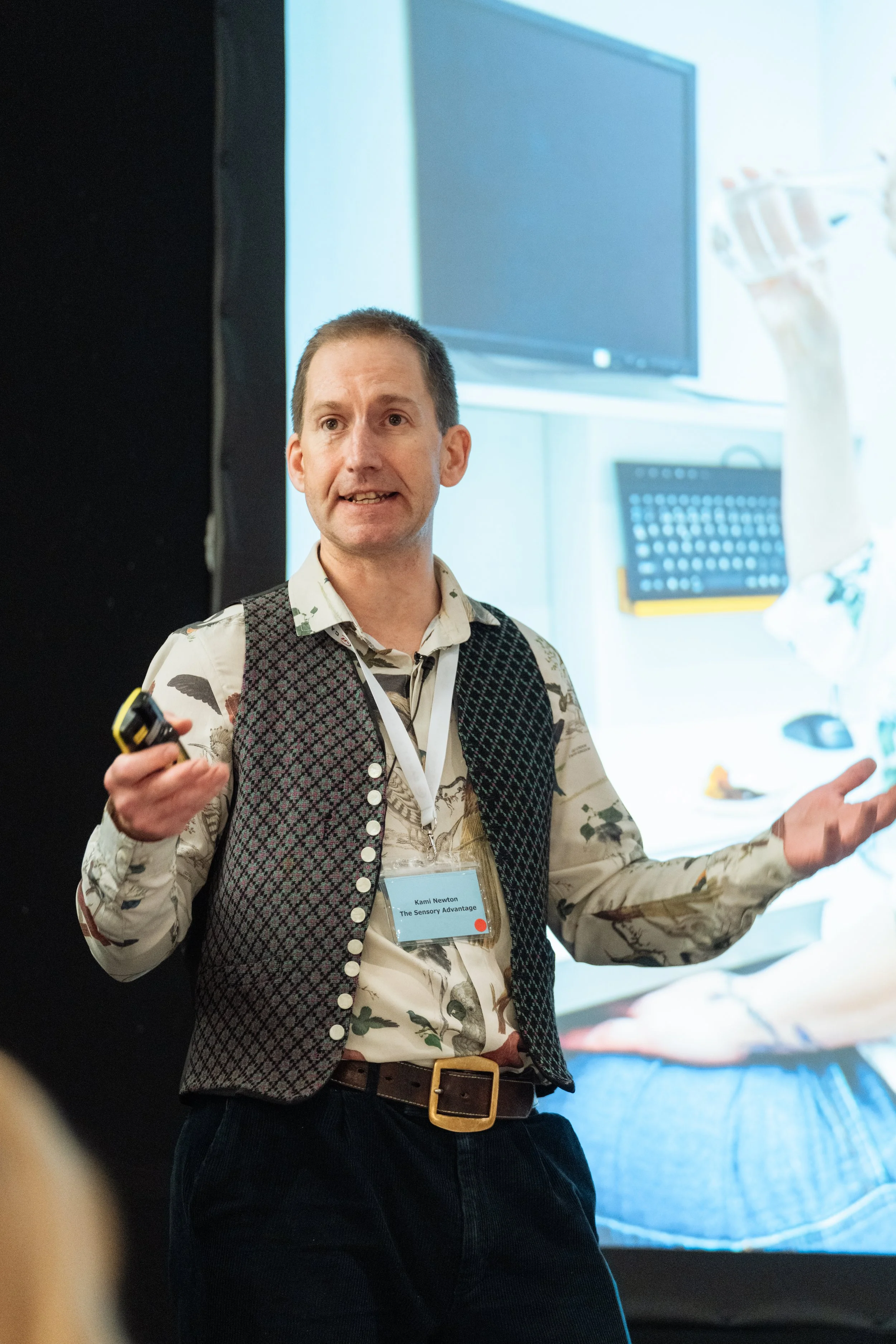
The product is only part of the experience.
Food and beverage products are often developed through distinct disciplines. Sensory teams evaluate product properties. Marketing shapes expectations. Brand teams establish associations. Consumer research measures responses. Commercial teams track performance.
Each discipline provides valuable information. But the experience connecting them is rarely examined as a whole.
What do people expect before they encounter the product? Which signals influence their judgement? How do aroma, taste, texture, context and emotion interact? What happens as the experience develops? What remains in memory, and how does that memory influence the next choice?
These are not separate questions. They are connected parts of the same process.
A product's perceived value emerges through the interaction between its physical properties, the person experiencing it and the circumstances in which the experience takes place.
Understanding those interactions creates opportunities to make better decisions, avoid misdiagnosis and focus development resources where they are most likely to matter.

“We had Kami come along to provide training for our entire visitor centre team and this proved to be a fantastic day for the staff. Everyone enjoyed the highly entertaining presentation but more importantly they left with a new knowledge and understanding of our product and also how to talk about it. I couldn’t recommend this any more to anyone wishing to get a deeper understanding of the sensory processes.”