
How Your Mouth Is Chemically Rewriting Flavour

There’s a common misconception that the drink in your glass is the same as the one that swirls within your mouth.
Understandably so. Why would we think otherwise as we swill, sniff, and sip. After all, it’s not like it magically transforms into something entirely different once it passes one’s lips. Or does it?
While many people are well versed in the key chemical changes that occur during fermentation, maturation, and of course distillation in the case of spirits, your mouth is an additional flavour factory that goes largely unnoticed. What I am referring to is not just dilution with saliva or temperature changes. Rather, mysterious phenomena within your mouth alter food and drink in the most remarkable ways.
Flavour is a movie, not a photo
We often view flavour as a photograph. A single moment in time captured through the evocative vernacularisms of tasting notes. However, the reality is that it’s more like a movie rather than just a single image. It’s a morphing, fluctuating, transformative process, and the food and drink in your mouth differ greatly to what was in your glass or on your plate. Once something passes your lips a complex and interdependent series of events transform it into something else.
Such effects are more obvious with food, whereby the breakdown of solids is far more tangible. But when we sip a drink, it doesn’t simply sit passively waiting to be swilled, chewed, and swallowed. The mouth is a complex factory where multiple processes transform the chemistry into something quite different. Such transformations are critical to flavour, finish, and aftertaste.
It's a crucial paradigm shift. We too easily assume the product we smell is equal to the product we taste. In fact, many drinks such as whisky or wine are judged by how well the ‘nose’ aligns with the ‘palate’. After all, what’s more disappointing than an enticing nose that fails to deliver once sipped. The reality is that a product in the mouth is in a constant state of change. Responsible for such changes are three pathways that are important to understand.
1) How enzymes shape flavour
Oral enzymes are there to kickstart the process of digestion by breaking down food and drink into smaller component parts such as sugars, fats, and nutrients. Brewers will be familiar with the enzyme amylase, which breaks down starches into more accessible sugars and polysaccharides, and further into smaller sugars such as glucose and maltose. Saliva is rich in amylase too for precisely the same purpose.
Other important oral enzymes include lipase, which breaks down fats (lipids) into smaller pieces the body can use. Esterase transforms fruity esters into alcohols and acids. And protease breaks proteins into polypeptides and amino acids. It’s therefore easy to understand their role during the early stages of the digestive process. But through breaking down larger compounds into smaller, more volatile molecules, enzymes liberate new aromas that are detected retronasally as smells.
However, such reactions are heavily dependent on the type of drink one is sipping. For example, research by Santos et al (2023) demonstrated how grappa at 41% abv induced high enzyme activity. The authors suggest this may relate to physiological stress responses associated with high alcohol and trigeminal burning sensations. Red wine and aged brandy showed higher activity than white wine and beer, potentially linked to sugar content and ageing-derived flavour compounds. Whilst port wine (tawny), with high sugar content and wood-aged characteristics, elicited higher amylase activity than red wine.
In addition, tannin-rich wines can inhibit enzymatic action, as tannins bind to salivary proteins and reduce activity. Enzymes can even metabolise and modify bitter-tasting molecules too, but they don’t work in isolation. Within your mouth are also a varied army of microbes.
2) Your personal army of microbiota
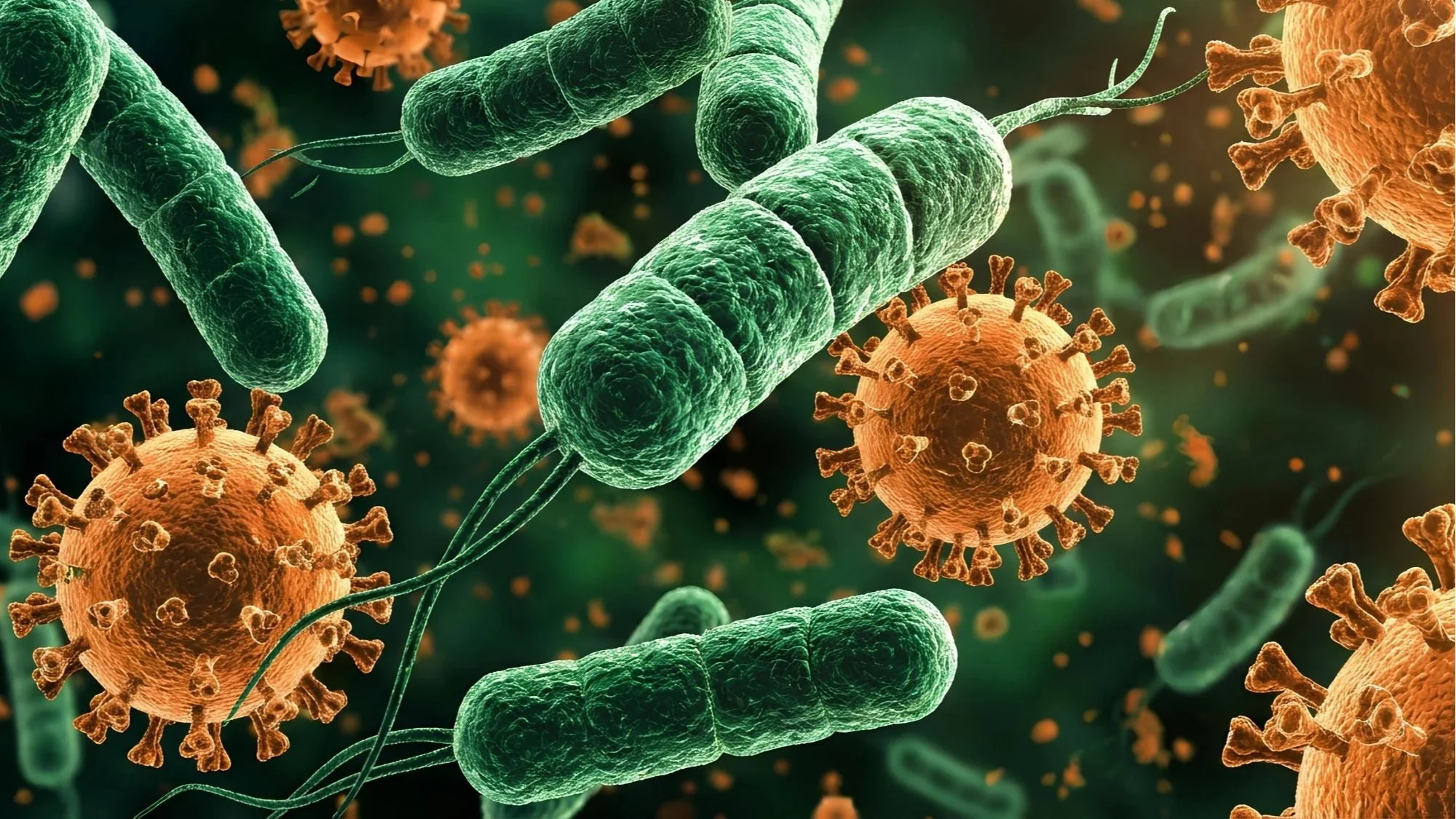
Your oral microbiota is the community of tiny microorganisms that inhabit your mouth. These are mostly bacteria but also include fungi and viruses as well. Think of it as an ecosystem made up of microbes coating your teeth, tongue, gums, throat, and cheeks. The important part for us is that research by M. Schwartz et al (2021) highlights how oral microbiota have a say in how we experience the flavour of products.
Your oral microbiota are metabolically active and continuously alter the chemical environment of the mouth. They synthesise, convert, and degrade compounds that engage taste and smell receptors through metabolic processes. For instance, they produce short-chain fatty acids and metabolise amino acids such as glutamate, thereby shaping the perceived intensity and hedonic quality of umami. They also influence the persistence of flavours by breaking down or transforming aroma and taste molecules, which in turn modifies both the strength and duration of the experience.
However, a key mechanism through which microorganisms impact flavour perception is through their ability to produce their own enzymes. These occur as biproducts and have a profound influence. For example: when you chew a vanilla or almond biscuit, the sugar‑linked flavour molecules (vanillin and benzaldehyde) are split by specific enzymes. The majority of these enzymes in our mouths are created by bacteria on the tongue. This molecular separation releases the actual aroma compounds, enabling vanilla, almond, or cherry to be detected as odours (Liu, et al, 2017).
Some oral microbes create a particular yet important class of enzymes called carbon–sulphur lyases. These enzymes are significant because they can unlock tiny amounts of sulphur compounds from food and drink. Even though the concentrations of these sulphur compounds is very small, they have remarkably powerful odours, such as onion, garlic, or tropical fruits. These reactions occur rapidly too, making them significant to the retronasal experience of food and drink (Shwartz et al, 2021). But there’s more.
3) Oral pH and flavour
The pH of your saliva is a significant determinant of flavour perception too. Under resting conditions, saliva maintains a near-neutral pH (approximately 6.2–7.4) and functions as a buffering system when food or drink enters the mouth. A reduction in pH tends to accentuate sourness, intensify astringency, and increase the volatility of certain esters, thereby amplifying fruity aromatic notes. Conversely, a higher pH can suppress volatility and attenuate specific flavour attributes (Hansson et al., 2001).
pH also modulates enzymatic kinetics. What do I mean by that? Salivary and microbial enzymes exhibit optimal activity within a relatively narrow pH range. Alterations in oral pH can therefore accelerate or decelerate enzymatic reactions, indirectly influencing the rate at which taste-active and aroma-active compounds are generated or released (Santos et al., 2023).
This research demonstrated that some drinks transiently alter oral pH upon mixing with saliva, partially buffering acidity and moderating perceived sharpness. However, pH varies across different products. Taken together, pH appears to influence not only primary taste qualities such as sourness and balance, but also the unfolding of flavour through its secondary effects on enzymatic activity.
Finish and aftertaste
Finish and aftertaste are used interchangeably to refer to the sensations in the mouth once food and drink have been swallowed. They are often mistaken for the lingering sensations that remain from residual molecules. However, through understanding how new flavours are created in the mouth, we can see how both finish and aftertaste are in fact something entirely unique. The effects of oral enzymes, microbiota, and pH reshape flavour over a timeline, but they work alongside other mechanisms too.
Dilution with saliva, temperature change, and lipid oxidation also play a significant role in flavour development. This creates a cascade of fluctuating odours and tastes as chewing and sipping continue. It explains why a drink can ‘open up’ mid-palate, why it finishes differently to how it begins, and why complexity develops with time. So if you’ve ever wondered why a drink can taste different to how it smells, this is one part of the puzzle - but there are others of course.
Another key consideration is the enzymes and microbiota that line the throat. Therefore, during the act of swallowing a drink will have further opportunity to change chemically and release additional odour molecules. Such molecules will enter the nasal cavity as one breathes out through the nose, where there will be detected as odours. This is key because most sensory panels and awards judging of drinks involve spitting versus swallowing - for very obvious and good reasons too. However, it is clear that to experience a product in it’s entirety, and in a way that represents consumption as opposed to evaluation, swallowing is a stage that requires exploration.
In short, the mouth is not just a gateway to digestion but a dynamic flavour factory. Such transformations go beyond what we perceive in the mouth, they shape the retronasal smell of volatile molecules too. However, the most liberating thought is that the balance of enzymes, microbiota, and pH is unique to each and every one of us. Therefore, how flavour develops inside your mouth is a personal journey, one that helps explain to some degree why we each experience flavour differently. But such a balance is not constant. Stress, anxiety, food, drink, and other factors shift the balance throughout the day.
If you enjoyed this and want to learn more about how flavour is shaped in the mouth, read all about what mouthfeel is here: Mouthfeel - The Unspoken Hero.
References:
Hansson, A., Andersson, J., Leufvén, A., & Pehrson, K. (2001). Effect of changes in pH on the release of flavour compounds from a soft drink-related model system. Food Chemistry.
Liu, D., Deng, Y., Sha, L., Hashem, M. A., & Gao, S. (2017). Impact of oral processing on texture attributes and taste perception. Journal of Food Science and Technology.
Santos, M. J., Mota, J., Correia, E., & Vilela, A. (2023). The science behind beverage flavors: The role of pH and amylase enzyme in the human mouth. BIO Web of Conferences.
Schwartz, M., Brignot, H., Feron, G., Hummel, T., Zhu, Y., von Koskull, D., Heydel, J.-M., Lirussi, F., Canon, F., & Neiers, F. (2022). Role of human salivary enzymes in bitter taste perception. Food Chemistry.
Schwartz, M., Canon, F., Feron, G., Neiers, F., & Gamero, A. (2021). Impact of oral microbiota on flavor perception: From food processing to in-mouth metabolization. Foods.