
Why Flavour Is More Prediction Than Perception
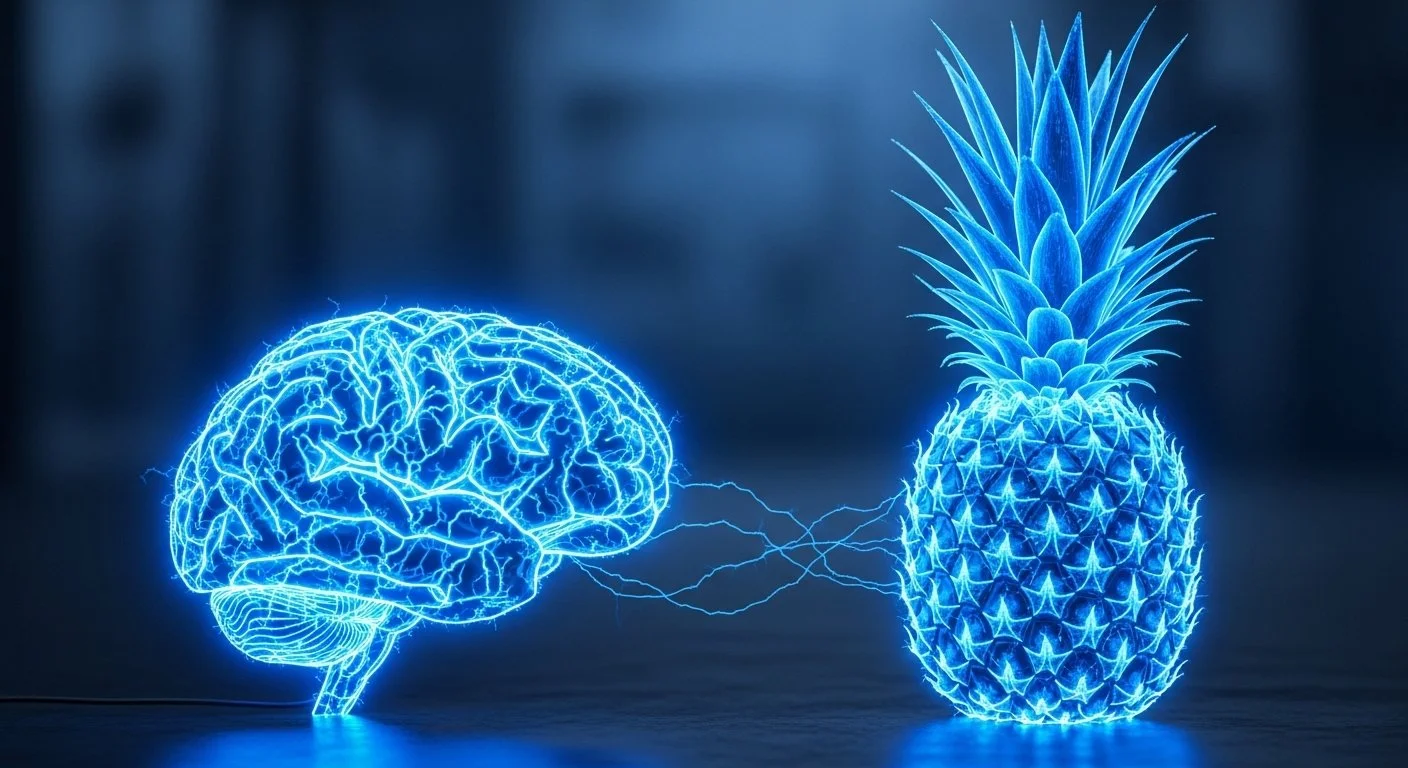
What if the biggest driver of flavour perception isn’t the product itself?
Not the formulation. Not the raw materials. Not the production process. Not even the chemistry in the glass or on the plate.
What if the biggest driver of flavour perception is the brain’s expectation of what should be there.
“Utter nonsense” – you may be justifiably thinking.
After all, for decades, flavour science has largely operated on an implicit assumption. That is, flavour perception is wholly based on stimuli input. Control the volatiles, formulate the congeners, refine the overall chemistry, and perception will surely follow. In fact, we have become so conditioned into believing that a product’s flavour is the result of sensory stimuli alone that to suggest otherwise ventures into the realm of fairy tales.
Except it doesn’t.
A growing body of research in neuroscience and sensory science suggests something far more disruptive. Perception is not a bottom-up reconstruction of reality whereby the brain reads flavour like a book. Rather, the brain constructs flavour before you’ve even taken a whiff based on expectations and predictions. Following this, it adjusts that prediction in real-time using actual sensory information from taste, smell, and mouthfeel.
The final output that we experience as flavour falls somewhere in between prediction and sensory perception. Rather than being a raw feed of data, what we perceive is an augmented reality at the intersection of anticipation and reality.
Sounds crazy?
It is. But by the end of this article it will sound perfectly reasonable.
The checker shadow illusion
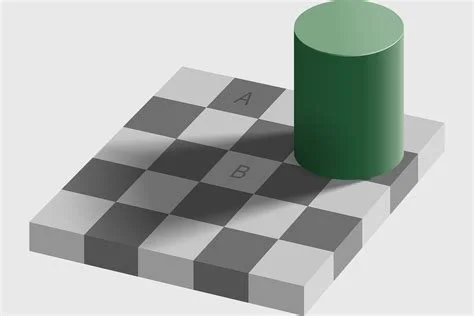
Firstly, before we get into the science, the checker shadow illusion is the perfect way to understand how the brain utilises predictive models in everyday life. In the illusion above, two squares (A and B) appear to be a different shade of grey. In fact, the illusion is so convincing that most people would find it hard to believe otherwise.
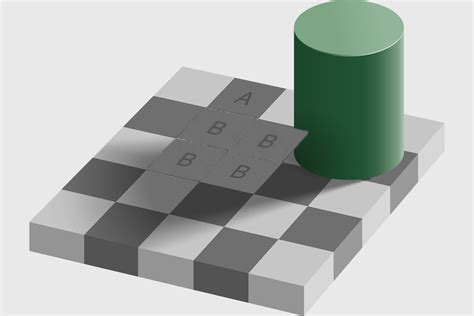
However, the squares are physically the same shade of grey. But one sits in a shadow, and the other doesn’t, so your brain perceives them as different.
In the image below, square B has been repeated to demonstrate that both A and B are indeed the same shade of grey. Nothing has been changed with square B. It’s exactly the same as it appears above, just repeated. Even comparing the two images it remains hard to believe doesn’t it? That’s how powerful predictive processing is.
Why does this happen?
It occurs because your brain isn’t just reading light levels. It’s inferring what the surface colour must be, given the context. It ‘knows’ that shadows make things look darker, so it automatically compensates. In effect, it predicts that if this square is in shadow, it’s probably lighter than it looks. So what you see is not the raw input, instead it’s the brain’s best guess.
The checker shadow illusion demonstrates your brain’s predictive mechanisms in a delightfully intuitive way:
The visual input (the grey square B) is ambiguous
The brain uses prior knowledge (how shadows work)
It generates a prediction about reality (this square is lighter)
That prediction overrides the raw sensory data
Thereby we can literally see how perception is not a passive readout of the world. Rather, it’s an active construction shaped by predictions. The same predictive mechanisms apply to all forms of perception; be that sight, hearing, smell, taste, and even flavour.
The shift from detection to prediction

In olfaction, this has been demonstrated with striking clarity.
In 2011, Zelano and colleagues asked participants to lay in an fMRI scanner whilst they smelled different mixtures. However, they were first shown a visual cue telling them a specific odour to expect (e.g., odour A or B), putting them into an active ‘search mode.’ A short delay with no smell present allowed researchers to observe anticipatory brain activity, before they were then presented with either the expected odour, a different odour, or a mixture of the two. Following this, they were asked to identify whether the target odour was present or not.
While brain activity in olfactory regions like the piriform cortex was tracked throughout; the key finding was that even during the delay period, before any stimulus arrived, the brain generated odour-specific activation patterns. These patterns resembled the expected smell, and the strength of this pre-activation predicted how accurately participants identified the odour when it was actually delivered. The results suggest that the brain forms a sensory template in advance of stimuli exposure and uses it to guide perception.
The implication is difficult to ignore.
The brain does not wait for odour input. It prepares a structured expectation in advance, and then evaluates incoming data against it. This reframes olfaction from a reactive system to a predictive one.
When expectation becomes perception

Taste research pushes this even further.
Nitschke and colleagues (2010) provided participants with visual cues indicating whether they should expect a low or high sweet taste before receiving a sucrose solution that was either congruent or incongruent with that expectation. Their brain activity was recorded using EEG; and after a brief delay following the cue, they tasted the solution and rated its intensity. This allowed researchers to compare both perceived sweetness and neural responses across matched and mismatched conditions.
The key finding was that expectation systematically shifted perceived intensity (low sweetness tasted stronger when high sweetness was expected, and vice versa). Critically, this effect appeared very early in the brain’s response (around 100 ms). This indicates that expectation was influencing the initial sensory encoding of taste rather than just later judgement or decision-making.
In essence, expectation wasn’t merely influencing interpretation. It was reshaping the sensory signals at the point of entry. So while we may like to believe what we experience is an accurate representation of chemical stimuli, the reality is that predictions based on past experiences bend the sensory signals to fit such expectations.
Further support comes from the review by Tivadar et al. (2021) and a study by Yan et al. (2023) who both argue that the brain is fundamentally a predictive system, continuously generating internal models to anticipate sensory input and minimise prediction error. Prediction error is the brain’s way of measuring how wrong it was. A small error implies that perception is stable as expectation matches sensory information, requiring less neural processing. On the other hand, a large error necessitates perception updates, an increase in attention, and new learning outcomes.
Naturally we have to apply a pinch of salt to such studies. While highly relevant under controlled conditions, the results lack ecological validity. That is to say, how the findings relate to the lived experience whereby flavour is experienced amidst social settings, distractions, and stressful days at work. The reality is that it is fundamentally impossible to recreate a real-world experience inside a fMRI scanner!
A predictive model of flavour
Nevertheless, taken together, these findings support a predictive architecture of perception that help explain real-world ‘illusions’ whilst providing frameworks we can apply to help product formulation:
The brain generates a sensory prediction based on prior knowledge and context.
Incoming sensory input is compared against that prediction.
The final percept reflects a combination of expectation and input, not a direct readout
This aligns with broader theoretical frameworks in neuroscience. Traditionally, you might assume perception works like a camera: the brain passively receives sensory input from the world and then reads-it-out as experience.
Predictive processing models argue almost the opposite. They propose that the brain is constantly generating predictions about what it expects to perceive, based on past experience and context. Those predictions are then compared to incoming sensory information. Perception is essentially the brain’s best guess after it has combined what it expects with what it actually receives.
This is often referred to as an ‘inferential process.’ This means the brain is behaving like a kind of statistical scientist. It is inferring what is most likely out there in the world, rather than simply registering it directly. The key idea is that what you consciously experience is not raw sensory data, but a constructed interpretation shaped heavily by prior expectations, with sensory input mainly acting as a check or correction signal when things don’t match.
In the context of Clark (2013) and Friston (2005), this is often formalised through ideas like Bayesian inference and prediction error minimisation. In simple terms: the brain is always trying to reduce the gap between what it predicts and what it senses.
Assimilation and the drive for consistency

A key mechanism underpinning these effects is assimilation.
When what we expect doesn’t match what we actually sense, the brain produces a kind of “something’s not right here” signal. In the Nitschke study, this mismatch showed up in brain activity as a stronger N400 response. An N400 response is a specific pattern of brain activity that appears when something doesn’t make sense to us. However, the system does not simply register the error and move on.
Instead, it often reduces the discrepancy by shifting perception toward expectation.
Consider the two wines in the image above. Your brain will be making predictions about their aroma and flavour. Perhaps that prediction is so strong that you can even ‘taste’ the wine in your mouth as if you had just taken a sip.
This process is computationally efficient. It stabilises perception and reduces uncertainty. It applies rules of thumb to perception which reduces energy consumption. Plus it preserves the nonconscious brain’s internal narrative. All of which are very important for the old grey matter. But it also means that perception is inherently biased toward internal models.
The brain, in effect, prefers coherence over accuracy.
Implications for flavour science
If perception is predictive, then the stimulus alone cannot explain the sensory experience. Expectation becomes an equally critical variable.
And expectation is shaped by:
Language and descriptors
Branding and positioning
Visual cues such as colour and texture
Prior experience and learned associations
Cultural context
Experimental framing
This raises a fundamental challenge for any brand, producer, or sensory scientist:
To what extent are we measuring the product, and to what extent are we measuring the participant’s predictive state?
Traditional sensory methodologies aim to isolate the stimulus through control and standardisation.Blind tasting, controlled environments, and trained panels are designed to minimise bias.But predictive processing cannot be removed, it can only be redirected.
Even in highly controlled settings, participants generate expectations based on instructions, scaling systems, repetition, lighting, and prior exposure. As the evidence shows, these expectations can influence perception at the earliest stages of sensory encoding.
This does not undermine sensory science. But it does require a broader conceptual framework; one that accounts for both stimulus and prediction.
Expertise as prediction refinement

Expertise is often assumed to increase objectivity. However, in reality, it may only increase predictive precision.
Experts possess richer internal models of flavour, built through repeated exposure and categorisation. These models enable more accurate predictions, but they also introduce stronger associations.
As a result, expert perception may be more structured, but not necessarily more neutral, or even more accurate. Therefore, expertise does not eliminate prediction. It refines it.
This shift from stimulus-driven to prediction-driven perception has important implications for R&D and product development.
Flavour is not a property of the product.
It is an emergent property of the interaction between:
The chemical composition of the product.
The predictive mechanisms of the brain.
Optimising one without considering the other limits control over the final experience.
Designing for the predictive brain
Understanding predictive perception opens up new strategic opportunities.
These include:
Aligning sensory cues and expectations to enhance perceived intensity and quality.
Avoiding brand qualities that mismatch expectations.
Designing product narratives and contexts that support intended sensory outcomes.
Rethinking sensory testing protocols to incorporate anticipatory effects.
This is not about manipulating perception, rather, it’s about recognising how perception works and designing accordingly.
The idea that flavour is a direct reflection of chemistry is increasingly difficult to defend. By the time sensory information reaches conscious awareness, it has already been shaped by predictive processes operating at multiple levels of the brain.
Therefore, perception is not a passive readout. It is an active construction.
And in that construction, expectation plays a far more powerful role than most of us realise.
At The Sensory Advantage, we work with flavourists, scientists, and R&D teams to apply such insights to real-world product development. Our workshops explore how predictive mechanisms shape perception, and how to design flavour experiences that align with how the brain actually works.
References
Clark, A. (2013). Whatever next? Predictive brains, situated agents, and the future of cognitive science. Behavioral and Brain Sciences.
Friston, K. (2005). A theory of cortical responses. Philosophical Transactions of the Royal Society.
Nitschke, J. B., Dixon, G. E., Sarinopoulos, I., Short, S. J., Cohen, J. D., Smith, E. E., Kosslyn, S. M., & Rose, R. M. (2010). Altering expectancy dampens neural response to aversive taste in primary taste cortex. Nature Neuroscience.
Tivadar, R. I., Knight, R. T., & Tzovara, A. (2021). Automatic sensory predictions: A review of predictive mechanisms in the brain and their link to conscious processing. Frontiers in Human Neuroscience.
Yan, C., de Lange, F.P. and Richter, D. (2023) ‘Conceptual associations generate sensory predictions’, Journal of Neuroscience.
Zelano, C., Mohanty, A., & Gottfried, J. A. (2011). Olfactory predictive codes and stimulus templates in piriform cortex. Neuron.